Introduction
If you pay attention to the current social media landscape, you will notice a sudden surge in healthy diet influencers, from professional dietitians, medical doctors, and healthy nutrition enthusiasts, all sounding the same alarm on the dangers of excessive animal protein consumption to their audiences. Most of these warnings are backed by scientific research such as a major cohort study published in The American Journal of Clinical Nutrition (Gu et al., 2023), which explicitly link high intake of red and processed meats to a significantly elevated risk of developing type 2 diabetes as well as various forms of cancer.
Driven by these health concerns, many meat consumers are eager to transition to plant-based alternatives. However, the challenge for most people looking to switch and/or include plant protein in their diet is often the lack knowledge about delicious options that successfully mimic the taste and texture of meat.
As a plant-forward culinary advocate and food journalist, my curiosity was immediately sparked when a friend shared a flier for a community mushroom initiative on his WhatsApp status. It prompted me to reach out and uncover the full story behind what seemed, at first glance, a simple agricultural project but turned out to be so much more.
This article highlights how two organizations are guiding this dietary shift in the Oti Region of Ghana by empowering persons with disabilities through oyster mushrooms production and processing as well as entrepreneurship training.
Alternative Protein as a Catalyst for Inclusion
When we talk about shifting toward alternative plant-based protein, mushrooms often take center stage. They offer different textures that effortlessly mimic animal meat, making them ideal alternative protein sources for stews, soups, pastry filling, stewers among other uses. Beyond its culinary versatility, mushrooms are sustainable crops suited for our ever-changing climate, they also provide many of the same nutritional benefits as vegetables, beans and grains. (htpp//www.mushroomcouncil.org)
However, true food sustainability isn’t just about what ends up on our plates but how food is produced.
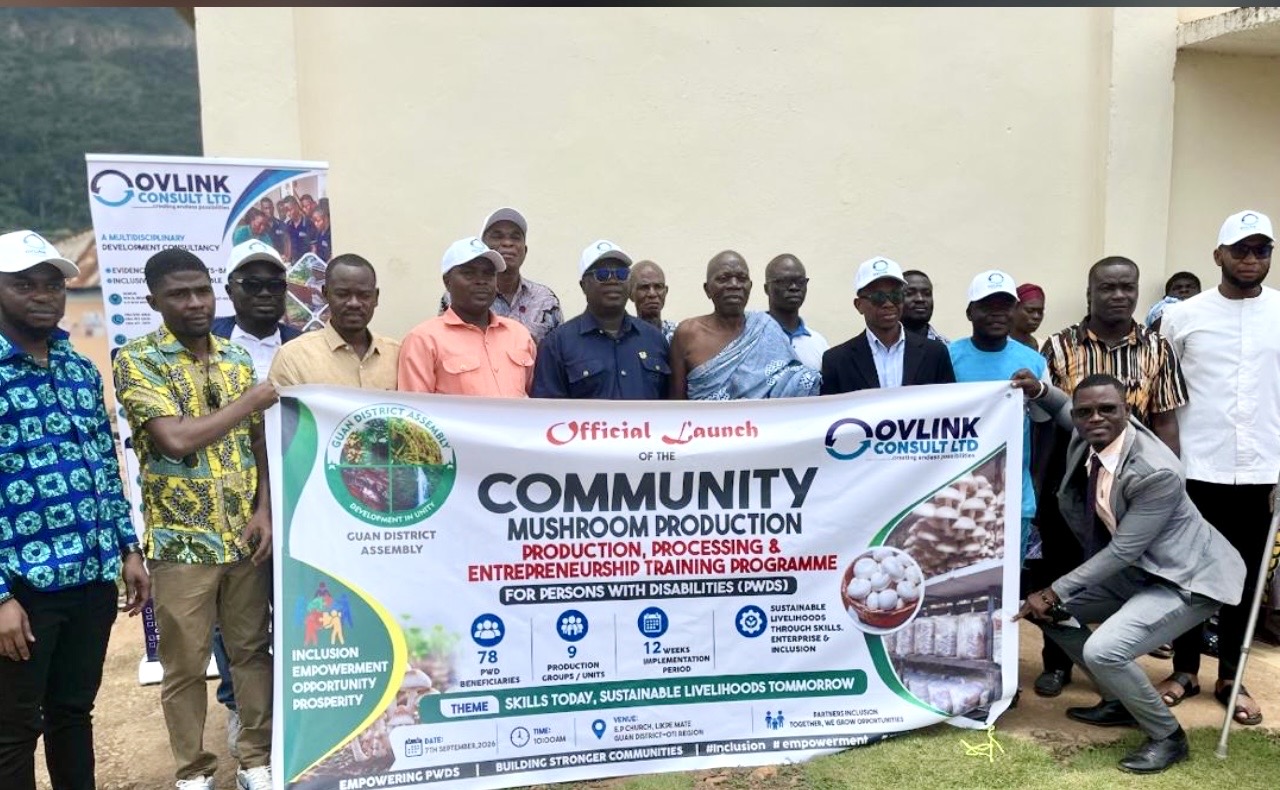
When I dug deeper into the WhatsApp flier, I discovered an inspiring story unfolding in the Guan District of the Oti Region. On September 7, 2026, at the E.P. Church in Likpe Mate, a groundbreaking people with disability centered initiative was officially unveiled: the Community Mushroom Production, Processing, and Entrepreneurship Training Programme.
This initiative is funded by the Guan District Assembly and implemented by OVLINK Consult Ltd, it is a 12-week collaborative program that combines agricultural training, enterprise development, and long-term mentorship to tackle economic inequality and social exclusion at the grass-roots level.
Why Oyster Mushrooms by people with Disabilities?
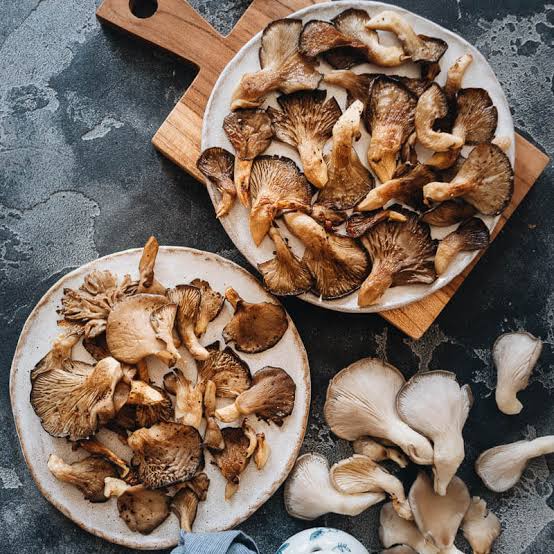
The initiative picked oyster mushroom cultivation because, unlike conventional crops, oyster mushroom farming requires very little land footprint, minimal initial capital, it can be cultivated both indoors and outdoors all year round.
Persons with Disabilities (PWDs) are the main target group for this project because, they face significant systemic hurdles in the Ghanaian society such as; limited access to farmland, capital, and specialized vocational training tailored for PWDs. Additionally, traditional farming often demands intense physical labour, which may not be compatible with many PWDs,
For me, a key important factor of this project is that it offers a practical, high-yield, and short-cycle pathway to genuine financial independence and sustainable livelihoods for people with disabilities in the Oti region.
Because oyster mushrooms typically take 3 to 5 weeks after harvest, a selected 78 entrepreneurs from various communities comprising both males and females are set to harvest their very first crop by mid-to-late October 2026.
Call to Action
When we advocate for a sustainable food-system in Ghana, we must endeavor to support initiatives such this mushroom project and other disability-inclusive projects. By buying their produce to financially empower them and the institutions that sponsor these projects.
Conclusion
Beyond this project empowering people with disabilities in the Oti region, it also promotes healthier communities, protein diversity, economic dignity, and sustainability. This is the inclusive, plant-forward future Ghana needs; one where our food choices heal our bodies, uplift communities, protect the environment, and leave no one behind. As a food journalist I am eager to support this cause by featuring the project on my blog and sharing its progress with my community (Vegan and Vegetarian Association of Ghana) where mushrooms serve as one of the major sources of protein.
Stay tuned for updates on the project and delicious recipes featuring locally grown oyster mushrooms.
The author Hawa Mutawakilu is a food journalist, plant-based chef, and sustainability advocate writing on indigenous Ghanaian foodways, food justice, and peaceful coexistence with the environment. She also serve as the Community Engagement and Adoption Lead for Tangelic.